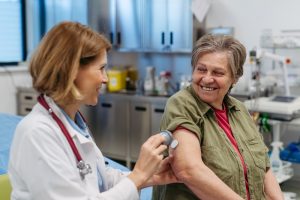
When you earn a Bachelor of Science in Nursing (BSN,) you have more than the typical degree and in a very real sense you’ve opened the door to an in-demand and respected career path. The registered nurses are at the core of any type of healthcare and they play a crucial role in advocacy, leadership and care of patients in clinics, hospitals and the community.
There are multiple paths into nursing, but the BSN will offer broader career opportunities with a stronger foundation for advanced roles and the earning potential is higher. The only real drawback is that nursing school is expensive and most future nurses would prefer to start their new career without incurring too much debt. Fortunately, there are ten current BSN programs that offer excellent value for money in 2025.

How to Become a Registered Nurse (RN) Online
To become an RN, a student needs to complete an accredited and state-approved nursing education program. Then they must pass the National Council Licensure Examination (NCLEX-RN) for their state. There are a few educational pathways that anyone that aspires to be a nurse can take to be eligible to take the licensure exam.
- An RN Diploma.
- A Bachelor of Science in Nursing (BSN).
- The Associate Degree in Nursing (ADN).
- The Associate of Science in Nursing (ASN).
An RN program covers clinical practices and nursing theory to prepare the student to sit for their NCLEX-RN exam. The BSN and ADN/ASN degrees are online courses with a clinical in-person requirement that must be completed at approved healthcare facilities.
The most common educational route for an aspiring nurse is the RN diploma program that’s offered by certain nursing schools and hospitals.
These diploma programs are not online and they don’t culminate in a college degree in nursing. But, an associate degree program and RN diploma can be completed in two or three years. To put this into perspective a bachelor’s degree will usually take three or four years of study to complete.
How to Earn a BSN Degree Online
There are several online BSN degree types and most of these are designed for a student with some college credit. An online nursing program is sufficiently flexible to accommodate the busy schedules of working professionals. Most of the coursework can be completed online, the only in-person requirements are the supervised clinical hours.
But, even these in-person elements of the course can be carried out at approved sites in the students community. Let’s take a look at the different online BSN programs, the application requirements and how long it takes to complete them.
Types of Online Nursing Degrees and Their Key Features
| Degree Type | Typical Duration | Ideal For | Key Courses | Prerequisites | Career Paths |
|---|---|---|---|---|---|
| Associate Degree in Nursing (ADN) | 18–24 months | Entry-level students seeking quick path | Anatomy, Pharmacology, Nursing Fundamentals | High school diploma or GED, basic science/math courses | RN (with NCLEX-RN), Home Health Nurse, School Nurse |
| Bachelor of Science in Nursing (BSN) | 3–4 years (or 12–18 months for RN-to-BSN) | RNs upgrading credentials or new students | Evidence-Based Practice, Pathophysiology, Ethics | High school diploma (pre-licensure) or ADN (RN-to-BSN) | RN, Clinical Nurse, Charge Nurse, Public Health Nurse |
| Master of Science in Nursing (MSN) | 1.5–2 years | BSN holders aiming for advanced roles | Leadership, Advanced Health Assessment, Informatics | BSN degree, RN license, 1–2 years of nursing experience | Nurse Educator, Nurse Practitioner, Nurse Manager |
| Doctor of Nursing Practice (DNP) | 2–4 years | Nurses pursuing leadership or research | Healthcare Policy, Clinical Leadership, Analytics | MSN degree, RN license, clinical practice hours | Nurse Executive, Clinical Researcher, Policy Consultant |
| Licensed Practical Nurse (LPN) to RN | 1–2 years | LPNs looking to become RNs | Adult Health, Maternal Nursing, Pharmacology | LPN license, some general education courses | RN, Acute Care Nurse, Long-Term Care Nurse |
| Certified Nursing Assistant (CNA) Program | 4–12 weeks | Beginners entering healthcare field | Basic Care, Infection Control, Patient Rights | High school diploma or none (varies by state) | CNA, Patient Care Tech, Nursing Assistant |
Do I Really Need a BSN?
If you want to offer the best care to others, work with doctors and healthcare providers and get to know your patients you will benefit from a BSN. Right now we have a shortage of nurses everywhere and it’s easier to find a job than many other careers.
If you have empathy for others and the capability to collaborate, you may find nursing to be a great fit for you. A traditional BSN can be expensive to earn and the education costs can be offset with an online degree program. Let’s take a look at some of the benefits of a bachelor’s degree online in more detail.
Lower Costs
This is the most common reason to choose an online learning program over a traditional on-campus one. The tuition fees are much lower, there are no travelling costs to commute to the campus and you can still qualify for financial aid.
Study from Home
With an online program you can engage with the clinical skills training and take the in-person rotations at an affiliate partnering healthcare facility. This means that you can study at home most of the time.
Flexibility
Students can take an accelerated or part-time course that meets their needs. This means that you can continue to earn and have some free time to meet your existing commitments.
10 Online BSN Programs that Offer Great Value for Money in 2025
To simplify your course selection process we’ve compiled a list of our top ten online nursing programs and in no particular order.

The University of Louisiana at Monroe
Here they offer the accelerated RN to BSN program for students that want to advance their skills and gain experience. This prepares the student for graduate studies and specialized nursing roles. The coursework covers a range of topics, including: information management systems, pharmacological principles and much more.
- Tracks/Concentrations: RN-BSN, LPN-BSN and MSN.
- Program Length: 14 months.
- Required Credits to Graduate: 120.
- Cost per Credit: $400.
- Accreditation: Southern Association of Colleges and Schools Commission on Colleges (SACSCOC) and the Commission on Collegiate Nursing Education (CCNE).
Florida SouthWestern State College
This school offers a bachelor-level program for RNs that have a diploma or an Associate of Science Degree in Nursing. The coursework is focused on building on the foundations established in the registered nursing program.
The RN to BSN programs requires the student to complete a variety of courses, such as: research, informatics, advanced health assessment, pharmacology, pathophysiology, leadership, multicultural nursing, community health and a capstone project. The courses are available online with a range of schedules for extra convenience.
- Tracks/Concentrations: ADN.
- Program Length: 4 terms.
- Required Credits to Graduate: 120.
- Cost per Credit: $125 in-state and $795 out-of-state.
- Accreditation: Accreditation Commission for Education in Nursing (ACEN) and SACSCOC.
McNeese State University
This institution offers an RN to BSN program that’s designed for working nurses in partner and non-partner healthcare institutions. The curriculum is established on evidence-based practice and community health. The student will learn a variety of topics, including: the business of nursing, patient care technology, informatics and more.
- Tracks/Concentrations: MSN and DNP-Psychiatric Mental Health Nursing.
- Program Length: 10 months.
- Required Credits to Graduate: 120.
- Cost per Credit: $233 in-state and $300 out-of-state.
- Accreditation: CCNE and SACSCOC.
Broward College
This institution offers a RN-BSN program in a purely remote or hybrid format. The curriculum uses Associate of Science (AS) and Associate of Arts (AA) lower-division coursework to form the basis of the bachelor’s degree. The upper-division nursing curriculum is designed for a professional nurse that wants to learn how to be a creative leader and acquire new skills to use cutting-edge technology in an interdisciplinary setting.
- Tracks/Concentrations: RN-BSN.
- Program Length: 12-18 months.
- Required Credits to Graduate: 123.
- Cost per Credit: $122.90 in-state and $243.40 out-of-state.
- Accreditation: CCNE and SACSCOC.
Tallahassee Community College
This college provides academic and work paths for an RN to advance into higher-level leadership and management roles. The BSN proves a solid academic foundation for the masters and doctorate nursing schools. The course is designed for nurses that are licensed with an ADN. The curriculum will complement the ADN academic and clinical experiences to facilitate a smooth transition for BSN students.
- Tracks/Concentrations: BSN.
- Program Length: 4 years.
- Required Credits to Graduate: 120.
- Cost per Credit: $101 for lower level courses and $128 for higher level.
- Accreditation: ACEN and SACSCOC.
University of Central Florida
This university offers an online BSN for those in the Florida College System Concurrent ASN to BSN degree completion program. The program is also open to registered nurses too and the coursework includes a wide variety of topics, such as: nursing research, health assessment, pathophysiology and more. This prepares the student for leadership roles, management responsibilities and those that want to move onto advanced degrees.
- Tracks/Concentrations: RN-BSN, MSN, DNP, PhD..
- Program Length: 1-3 years.
- Required Credits to Graduate: 120.
- Cost per Credit: $179 in-state and $715 out-of-state.
- Accreditation: CCNE and SACSCOC.
Georgia Southwestern State University
This institution offers a flexible online RN-BSN program for students that have finished an associate degree or diploma in nursing. The majority of students complete the coursework quickly, but they may choose to finish in three or even up to five years in certain circumstances. Every student is free to develop their own model plan of study with valuable input from their professional nursing advisor.
- Tracks/Concentrations: MSN.
- Program Length: Typically 1-2 years.
- Required Credits to Graduate: 120.
- Cost per Credit: $174 for both in-state and out-of-state.
- Accreditation: CCNE and SACSCOC.

Cleveland State University
This university offers a RN to BSN program in an online and blended (hybrid) learning format. This builds on the professional experience of licensed nurses and the prerequisite coursework. The student will study a range of topics, including: clinical data analytics, palliative care and many more.
- Tracks/Concentrations: MSN.
- Program Length: Typically 1 year (online) and 2 years (blended learning).
- Required Credits to Graduate: 120.
- Cost per Credit: $536 in-state and $766 out-of-state.
- Accreditation: CCNE and Higher Learning Commission (HLC).
Florida International University
This institution offers a RN to BSN online track in their Bachelor of Science in Nursing program. This is designed to prepare a healthcare professional to become a leader and expert in their chosen field.
At the core of the program is nursing leadership, community health and care and wellness across cultures. There are also classes in other topics, such as: nursing research, evidence-based learning, nursing global healthcare systems and more.
- Tracks/Concentrations: Doctor of Nursing Practice (DNP).
- Program Length: 1 year.
- Required Credits to Graduate: 120.
- Cost per Credit: $235 in-state and $649 out-of-state.
- Accreditation: CCNE and SACSCOC.
Columbus State University
This university has an RN to BSN online program designed for registered nurses to earn their bachelor’s degree while they continue to practice their profession. Every class is asynchronous and supported by qualified faculty members from a variety of nursing backgrounds. This program is approved by the Georgia Board of Nursing and it’s accredited by the Commission on Collegiate Nursing Education.
- Tracks/Concentrations: MSN.
- Program Length: 1 year.
- Required Credits to Graduate: 123.
- Cost per Credit: $199.
- Accreditation: CCNE and SACSCOC.
How Do I Choose the Best Nursing Program?
As you can see, there is no one-size-fits-all solution and there are a wide variety of programs to choose from. Some of the best programs are RN to BSN that give a registered nurse a route to a bachelor’s in nursing. The healthcare systems value these programs and they are a path to further education. The key factors will be the program length, the education costs, the salary potential and the job outlook:
Program Length
The average time to complete a BSN in nursing degree is four years. There are degrees on our list that are RN-BSN which can vary from one to three years with a focus on registered nurses that want to earn their BSN.
Those that want to continue to work as they study can take a part-time course. This extends the program length, but it does relax the schedule and workload for busy working students.
Education Costs
According to the National Center for Education Statistics (NCES), average yearly tuition fees exceed $9,500. But, most students won’t pay that much and after financial aid this will drop to around $6,300. Financial aid can be sought through a state financial aid website or FAFSA.
If certain income thresholds are met, it is possible to qualify for scholarships or grants that don’t need to be paid back after graduation. Complete the FAFSA, submit it to the college and ask for a financial aid package to understand the out of pocket costs for your chosen program.
Salary Potential and Job Outlook
Nurses are in high demand at the moment and this isn’t set to change any time soon. The salary potential will vary depending on where you want to practice, your experience and education level. Two useful resources are Nurse.org and Intelycare which are websites that offer guides on nurse salaries by state and career type.

FAQs
Is Nursing a Worthwhile Career?
The short answer is maybe if the individual has the proper temperament for the work, empathy for others and desire to specialize in certain fields. Nursing can be a dynamic and rewarding career for the right person with opportunities to work in a wide variety of fields, such as: Pediatric ICU, OB critical care, mental health nursing, med/surg, ICU, ER, NICU and many more.
When we think about nurses, we tend to envisage them working in traditional clinics or hospital settings. But, outside these traditional nursing roles there are other roles to consider, including: research, school nursing, home health, fixed-wing air transport, cruise ships and more. Nursing is a flexible and rewarding career with multiple options to explore that can suit a range of interests.
What are the Benefits of an Online Nursing Degree?
An online nursing program gives you the opportunity to learn at your own pace because it is accessible and flexible. There are considerable savings, such as: commuting to a campus, relocation expenses, on-campus housing, tuition fees, course materials and more. A graduate of an online nursing program can earn up to $89,000 per year which offers a considerable return on investment.
Is Accreditation Important?
Yes. It doesn’t matter which BSN pathway you select, the most important consideration is that you choose an accredited program or nursing school. This will ensure that you can transfer credit between programs, ally for federal aid and be eligible for certification and ultimately employment as a registered nurse.
There are two national associations that grant nursing program accreditation: the Commission on Collegiate Nursing Education (CCNE) and the Accreditation Commission for Education in Nursing (ACEN).
What Should I Expect?
An online nursing program will provide you with in-demand skills to move into a variety of healthcare roles. The best online programs will use synchronous and asynchronous delivery methods.
There will be digital learning materials, such as: ebooks, videos, audio clips and academic databases to use and refer to as needed. You should expect remote service support with academic advice, tutoring programs and personal consulting to help you meet your education and career goals.
Most institutions now offer productivity apps, management systems, messaging apps, collaborative tools, telehealth and even virtual simulations to help students learn efficiently. There will be on-site clinical training at a local partner healthcare facility to get the required hands-on experience.
These features will vary depending on the school and if you want something specific it’s a great idea to ask questions and carry out further research.